

The Ethics of Embodiment
On truth, constraint, and the cost of speaking

We live in an age of moral pronouncements. Everyone knows what’s right. Yet the gap between what we say and what we do has never been wider.
This Catalog is about people who tried to close that gap—and what it cost them. It is about the choices we face when living our principles collides with risk, power, or expectation. And the question they faced, and we all face in some form, is simple: will you speak, or will you perform safety?
The arena has shifted—from town squares to platforms, from inquisitions to algorithms. Speaking itself has become dangerous again.
The methods change. The mechanism remains.
The Fire and the Choice
Jan Hus stood before the Council of Constance, accused of heresy. A Bohemian priest and philosopher from Prague, Hus had spent years challenging the corruption of the Catholic Church—its sale of indulgences, the moral decay of its clergy, the gap between what the Church preached and what it practiced.
The council offered him a choice: recant his teachings, or burn.
Hus refused.
On July 6, 1415, they led him to the stake. As the flames rose, witnesses reported that he sang hymns until the smoke took his voice.
Jan Hus didn’t die for an idea. He died because he lived the idea. He couldn’t separate his beliefs from his actions—couldn’t claim truth while practicing falsehood. His entire life had become the argument.
Beliefs can be negotiated. Theology can be debated, scripture argued, doctrine parsed. But a life cannot be negotiated. When belief becomes embodiment, there’s nothing left to bargain with.
The stake is a crude instrument. But it’s effective. It forces a choice between silence and consequence.
Today, we don’t face literal flames. But we face deletion, deplatforming, doxxing, smear campaigns—the algorithmic silencing of voices that refuse to perform compliance. The mechanism adapts. The choice remains.
The Renunciation
Saint Francis of Assisi, early 13th century
Francis was the son of a wealthy cloth merchant. He lived the life expected of him—comfortable, privileged, destined to inherit his father’s business and position.
Then something shifted.
In the town square, in front of the bishop and a gathered crowd, Francis removed his clothes. Every piece. He returned them to his father, renouncing not just his inheritance but the entire system that had shaped him.
He walked away naked.
Not everyone could. Renunciation requires something to renounce—wealth, security, a father’s cloth business. The privilege of refusal.
Francis didn’t argue against wealth. He didn’t write treatises on inequality. He simply refused to participate. He lived with lepers. He rebuilt churches with his own hands. According to legend, he preached to birds. He owned nothing, desired nothing, asked for nothing.
His act exemplified what ethicist Rushworth M. Kidder called moral courage—the bridge between talking ethics and doing ethics.
Ethics cannot be embodied while clinging to the systems that reward their opposite.
Francis understood something brutal: complicity isn’t always active. Sometimes it’s just comfort. The willingness to accept the benefits of an unjust system because dismantling it would cost you everything.
Most of us will never face that choice. But we face smaller versions every day: the moment when staying silent is easier than speaking, when comfort outweighs conscience, when we choose safety over truth.
The Constrained Witness
Alexander Dubček, Czechoslovakia, August 1968
Alexander Dubček had been the face of the Prague Spring (1968)—a brief, hopeful period when Czechoslovakia attempted to build “socialism with a human face.” Reforms. Freedoms. The possibility of something different.
Then, on the night of August 20–21, 1968, the Soviet Union invaded.
Tanks rolled into Prague. Dubček was arrested, taken to Moscow, and confronted with an impossible choice: endorse the occupation, or watch his country be crushed under military force.
He couldn’t be a martyr—his death would mean more violence, more bloodshed. He couldn’t renounce everything—he was responsible for millions of people whose survival depended on his decisions.
So on August 27, 1968, Dubček returned to Czechoslovakia and gave a radio address to the nation.
His voice broke.
You can hear it in the recording—decades later, archived, digitized, still available. He’s trying to explain. Trying to hold himself together. The emotion breaks through despite him.
We interpret that break as truth. As the moment when the performance couldn’t hold. When the gap between what he had to say and what he felt became audible. But we don’t actually know what he felt. Signs aren’t proof.
Not everyone gets to be a martyr. Not everyone can renounce everything and walk away. Some people are trapped between impossible choices—where every option is a betrayal, and survival means compromise.
Dubček’s broken voice reminds us that embodied ethics don’t always look heroic. Sometimes they look like exhaustion. Sometimes they sound like a man trying to hold himself together while the world he tried to build collapses around him.
And sometimes, the only truth left is what slips through despite us.
The Fool's License
Medieval Jesters, Courts and Villages of Europe
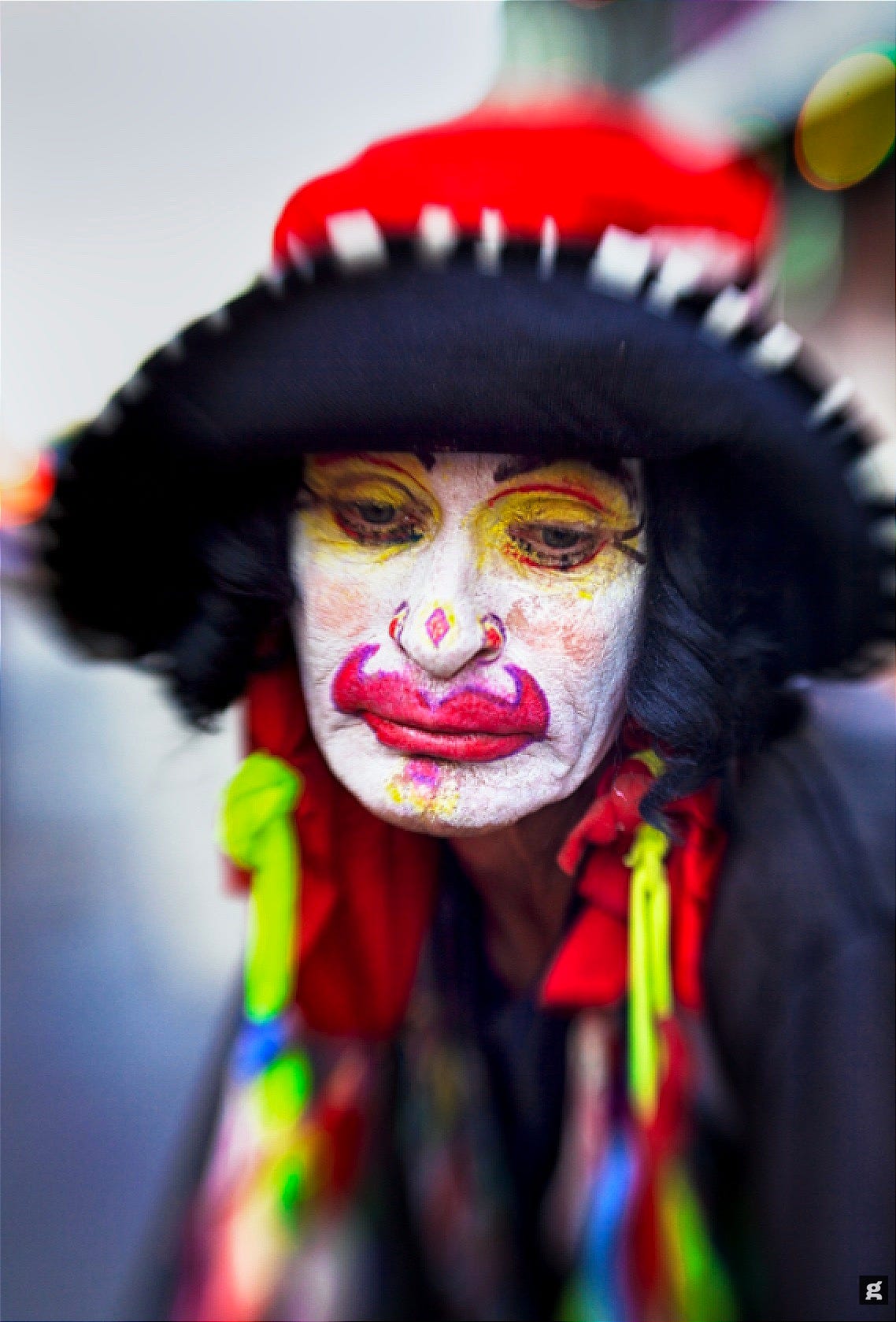
In medieval courts and villages, jesters occupied a strange social position. They were entertainers—expected to amuse, to perform, to make people laugh. But they were also licensed truth-tellers.
A jester could mock the king. They could expose hypocrisy, point out corruption, speak truths that would get anyone else executed—because they weren’t taken seriously. The mask protected them. Their humor was their armor.
Jesters weren’t just court entertainment. In wartime, some rode at the front of armies, shouting insults and singing mocking songs to provoke enemies into premature attacks. Others served as messengers between enemy camps—a dangerous role, because sometimes they were killed for the messages they carried.
Truth doesn’t always come dressed as truth. Sometimes it wears a mask. Sometimes it hides inside a joke, a song, a performance that makes people laugh while planting the seed of a question they can’t quite shake.
But the fool’s license only works when the powerful permit it. When they’re confident enough, secure enough, to tolerate mockery because they don’t see it as a real threat.
Today, that license is under threat. The mask still protects some, but barely. Say the wrong thing—even in jest, even in art, even as satire—and the mechanism activates: doxing, deletion, public shaming, the digital bonfire.
The clown’s territory is shrinking. And when truth can no longer wear a mask, it has two choices: silence, or the stake.
The Catalog Continues
In some old Russian households, there’s a folklore belief: if someone oversalts the food, it means they’re in love. Distracted. Not paying attention. Their inner state slipping through despite them.
The belief has roots in old wedding rituals, where a bride would generously salt a dish for her groom’s parents—so as not to appear stingy. Over time, the gesture became folklore: too much salt means the cook’s mind is elsewhere. On someone. In love.
Just as we interpret these small gestures, or a broken voice, or the actions of people like Hus, Francis, or Dubček, we are always reading signs—and deciding what they mean.
I don’t know if this is true.
What I do know is this: we’re constantly discerning meaning—in history, in voices, in salt, in everything we collect. Interpretation is never neutral, never certain, never final.
The fragments keep arriving. A film watched. A quote overheard. A piece of folklore that might mean nothing—or everything.
You decide.
But deciding requires more than interpretation. It requires action.
The question remains: Will you speak, or will you perform safety?
Because in the end, morality isn’t something we write. It’s something we are.
Companion Playlist
These pieces accompanied me while writing this essay